
Year-end sales also attract scammers. Here is the Federal Trade Commission (FTC) advice for shopping online without being fooled.
The reflexes
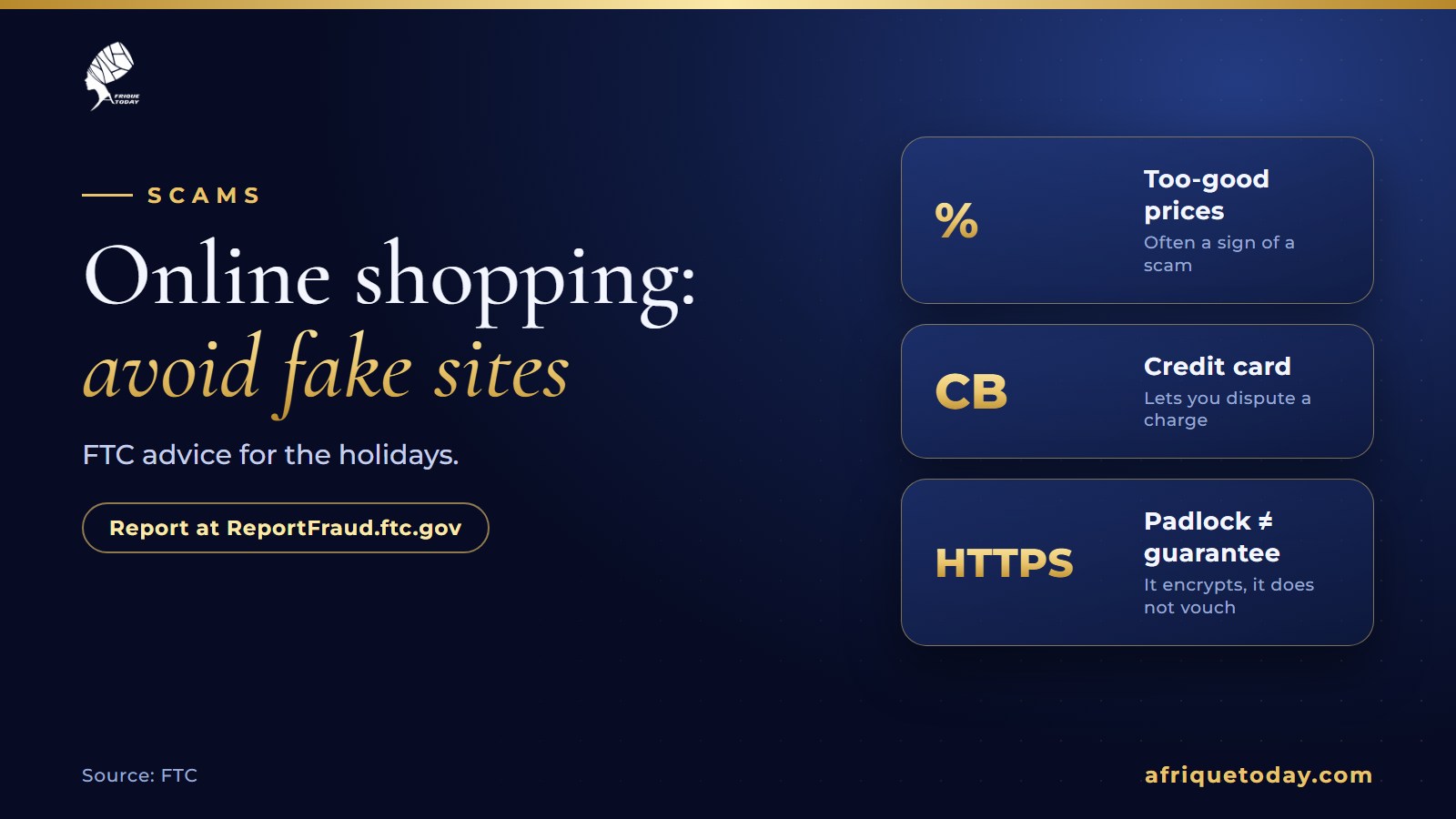
- Be wary of too-good prices: deep discounts on brand-name goods, especially in social media ads, are often a sign of a scam.
- Go to the seller directly: open the company’s website from a page you trust rather than through the ad’s link.
- Research the seller: search the seller’s name with ‘review’, ‘complaint’ or ‘scam’. Some reviews are fake.
- Watch the payment method: a seller that accepts only gift cards, wires, payment apps or cryptocurrency is probably a scam. A credit card is generally the safest, since it lets you dispute a charge.
- The padlock is not enough: the ‘s’ in https means the connection is encrypted, not that the site is legitimate.
If something goes wrong
Keep receipts and order confirmations. Contact the company you used to pay to dispute the charge, then report the fraud at ReportFraud.ftc.gov.
This article is informational.
Sources
This article is our own summary. Official sources : FTC, Online Shopping ; FTC, holiday shopping alert.