
During Pink October, breast cancer awareness month, a common question is: where can you get screened if you have no insurance, or insurance that does not cover everything? In Maryland, public programs fund breast and cervical cancer screening for people with limited income. Here are the criteria published by the health authorities and how to find your county’s program.
The criteria in Maryland
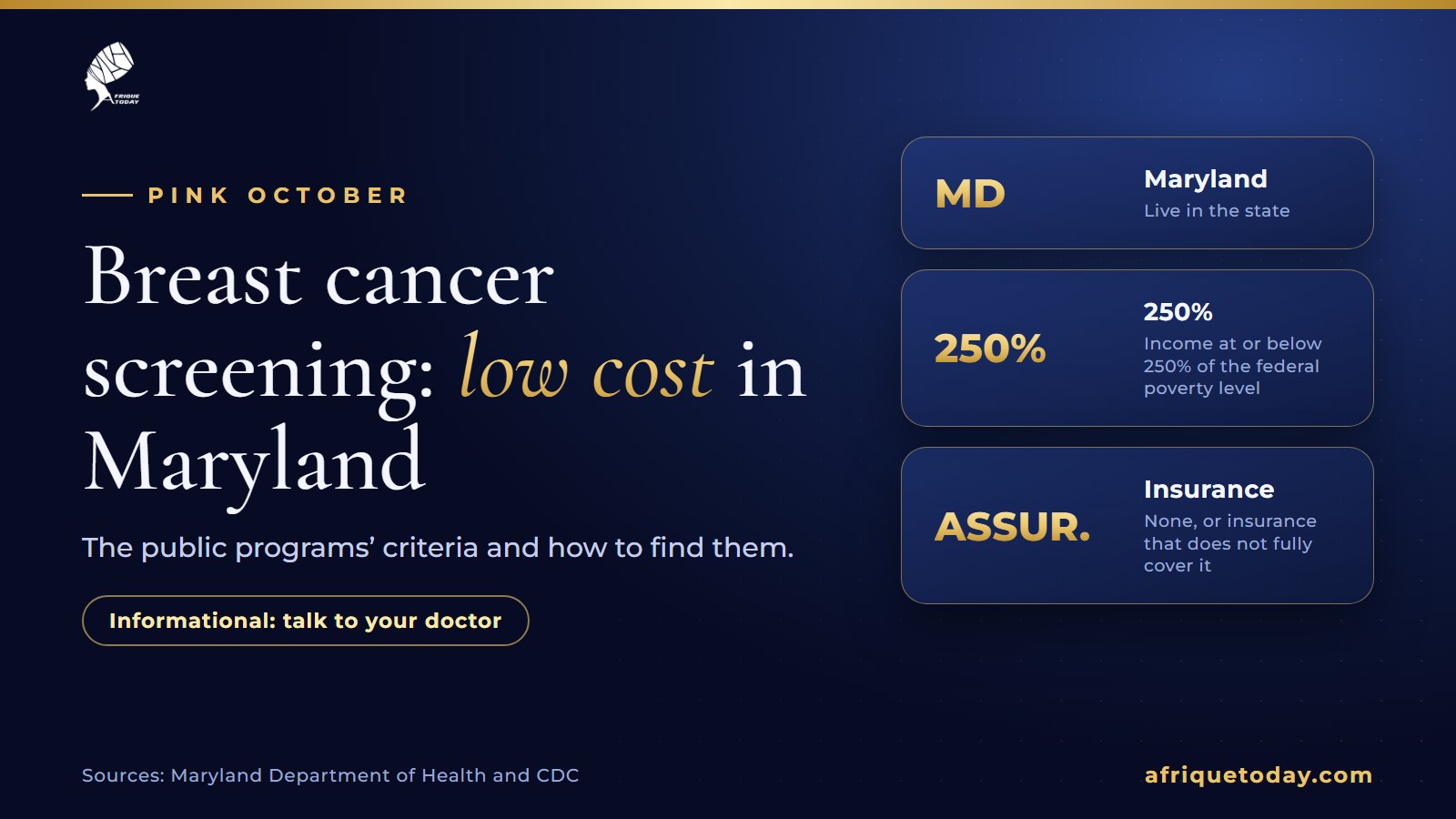
According to the Maryland Department of Health page on cancer programs, to qualify you must:
- live in Maryland;
- have an income at or below 250% of the federal poverty level;
- have no health insurance, or insurance that does not fully pay for screenings.
These programs are funded by the Breast and Cervical Cancer Program (BCCP) and the Cigarette Restitution Fund.
Who is eligible?
The CDC, which funds the national early detection program, says breast cancer screening is for women aged 40 to 64 and cervical cancer screening for women aged 21 to 64, and that certain younger or older women may also qualify. Services include screenings and diagnostic tests.
How to find your county’s program
- Open the Maryland Department of Health’s “Cancer Programs by County/Jurisdiction” page and select your county (for example Montgomery or Prince George’s).
- You can also call the Maryland Department of Health main line at 410-767-6500 or 1-877-463-3464. It is the department’s general line, not a cancer-specific line: ask for your county’s breast screening program.
- Ask your doctor or community clinic as well.
What the official pages do not say
The pages we consulted do not state the dollar amounts that correspond to 250% of the poverty level, the documents required, or any requirement related to immigration status (they do not mention it). For these questions, ask your county’s program directly before you go.
Learn more
On October 18, AMAW (Association des Maliens du DMV) hosted a panel on breast cancer with a survivor and an oncologist: read our article.
This article is informational and does not replace the advice of a health professional. If you have a worrying symptom, see a doctor without waiting.
Sources
This article is our own summary. Official sources: Maryland Department of Health, Cancer Programs by County/Jurisdiction; CDC, National Breast and Cervical Cancer Early Detection Program.